
Symptom diary
Our B.E.A.T. symptom diary allows you to keep a record of your symptoms. This can help you to discuss how you are feeling with your doctor, who can then decide if tests or scans are necessary.
The Ovacome symptom diary combines information about the B.E.A.T symptoms with a diary to track their frequency, and add notes or questions for a GP.
If you are worried, your symptoms aren't getting better, or they are getting worse, book an appointment to see a doctor straight away.
Take your symptom diary with you and ask them to refer to the NICE clinical guideline CG122 Ovarian cancer: recognition and initial management.
If you would like us to send you a printed version of the symptom diary in the post, call 0800 008 7054 or email support@ovacome.org.uk
Visit our symptoms page to learn more about the symptoms of ovarian cancer, and to download our 'Symptoms of ovarian cancer' booklet.
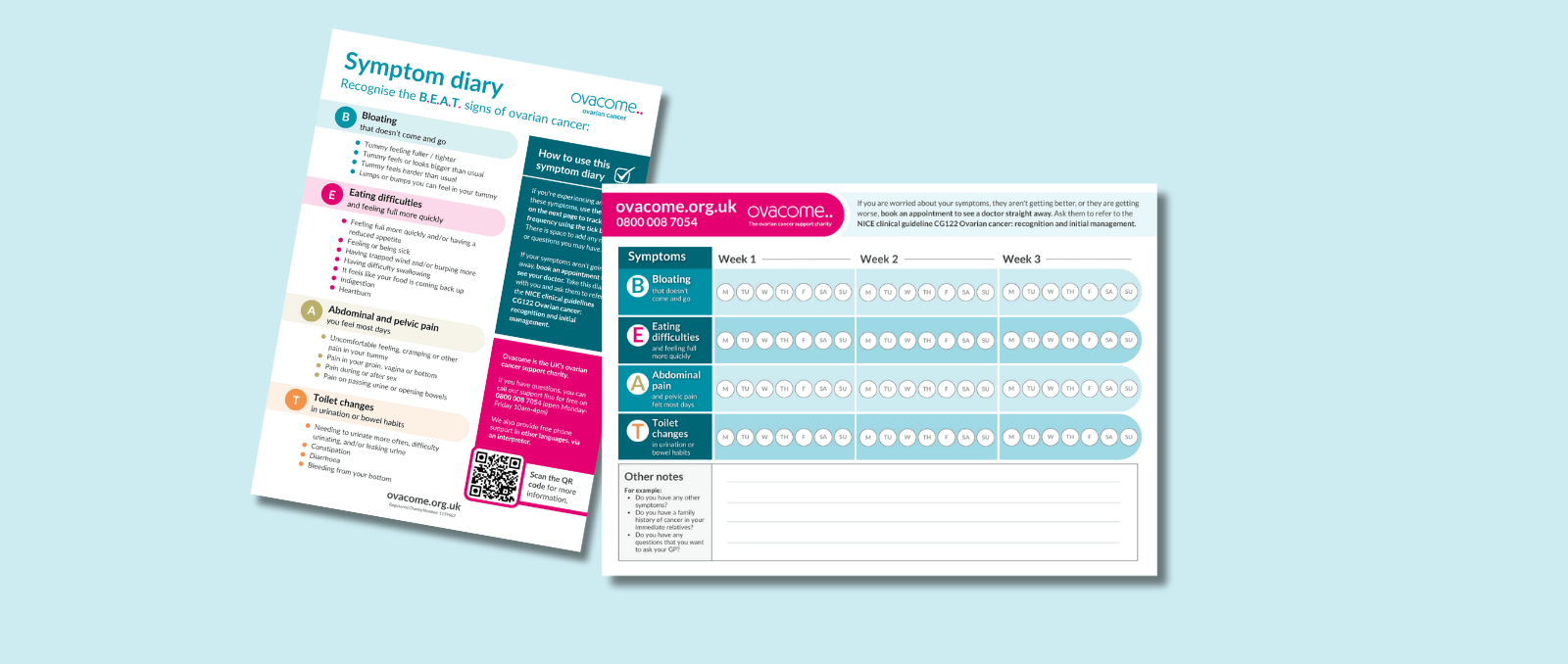
How to use the symptom diary
If your symptoms aren't going away, book an appointment to see your doctor. Take your symptom diary with you and ask them to refer to the NICE clinical guidelines CG122 Ovarian cancer: recognition and initial management.
Remember:
- Symptoms of ovarian cancer can vary from person to person
- Although ovarian cancer can occur at any age, it mostly occurs in people over the age of 50. If you have a strong family history of breast or ovarian cancer you may be more at risk
- Cervical screening (smear test) does not detect ovarian cancer
If you have questions, you can call our support line for free on
0800 008 7054 (open Monday-Friday 10am-4pm).
We also provide free phone support in other languages via an interpreter.
Recognise the B.E.A.T signs of ovarian cancer
Bloating
that doesn't come and go
- Tummy feeling fuller / tighter
- Tummy feels or looks bigger than usual
- Tummy feels harder than usual
- Lumps or bumps you can feel in your tummy
Eating difficulties
and feeling full more quickly
- Feeling full more quickly and/or having a reduced appetite
- Feeling or being sick
- Having trapped wind and/or burping more
- Having difficulty swallowing
- It feels like your food is coming back up
- Indigestion
- Heartburn
Abdominal and pelvic pain
you feel most days
- Uncomfortable feeling, cramping or other pain in your tummy
- Pain in your groin, vagina or bottom
- Pain during or after sex
- Pain on passing urine or opening bowels
Toilet changes
in urination or bowel habits
- Needing to urinate more often, difficulty urinating, and/or leaking urine
- Constipation
- Diarrhoea
- Bleeding from your bottom