Charlotte
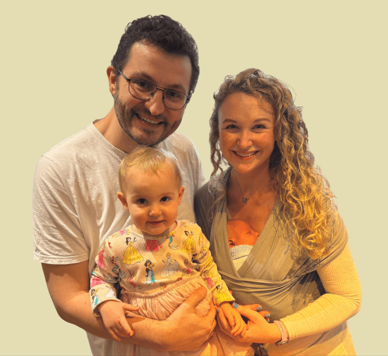
In this story, we look at Charlotte’s experience of being diagnosed with a Granulosa Cell Tumour (GCT), a type of sex cord stromal tumour. These tumours develop from cells in the ovary that produce hormones. GCT is a rarer form of ovarian cancer and the average age for this diagnosis is age 50.
Charlotte is a GP, who in recent years has developed a special interest in earlier cancer diagnosis, as well as women’s health and education. This interest developed after her own personal experience with ovarian cancer at the age of just 31. Charlotte hopes by sharing her story with Ovacome she can help raise awareness of the disease and help others who may be facing a similar situation and highlight some of the challenges that come with being diagnosed with cancer as a younger person.
For Charlotte, her diagnosis arrived during the Covid-19 pandemic, and she recalled experiencing very few definitive symptoms of anything being majorly wrong at the time.
“I was 31 at the time and my husband and I wanted to try for a baby to start a family. I hadn’t really noticed any signs that were concerning me, but my tummy didn’t feel quite right, and my bowels were a bit off, which I had put down to stress. I was only 31 so I was not thinking along the lines of cancer at all, but I visited my GP predominantly to look into my fertility. Thankfully, she asked me lots of different questions about my health and identified that I had some vague symptoms, which she wanted to investigate further.”
It was the subsequent further investigations from her GP that led Charlotte to have an ultrasound scan of her pelvis. The scan revealed a very large tumour which was immediately suspected to be a Granulosa Cell Tumour (GCT) because of the way that it appeared on the scan, with further testing confirming the likely diagnosis.
“After my diagnosis I was shocked of course, and I immediately joined an online support group dedicated to GCT, which was run by a lady called Linda. I learned from everyone else there about their symptoms, treatment options etc. I think the unique side of my story is that I was 31 at diagnosis, and like most ovarian cancers, GCT is usually a type of cancer that affects slightly older, post-menopausal women. Because of this I actually now run a very small subgroup of the support group, dedicated to pre-menopausal GCT survivors.”
Charlotte recalled the uncertainty that follows a rare ovarian cancer diagnosis, especially as a younger woman:
"I think being diagnosed with a rare ovarian cancer type, and then also being diagnosed at a young age made it extra hard to process what was happening. It just spins you into this world of uncertainty, and I think that creates lots of different questions in your head like; what about my fertility? Am I going to be able to work? What's the plans for the future? Are we going to be able to pay our mortgage if I can't work?All of these questions are swimming around in your head, and you're struggling to find resources that are targeted towards you and where you feel seen. I think when you feel isolated as well during that time, it makes it doubly hard.”
One of the most concerning aspects of this diagnosis for Charlotte was the implications it may have on her ability to have biological children of her own.
“I think the fertility aspect was actually the biggest thing for me. It was my main concern when I got the diagnosis, because it's kind of what led to diagnosis. I wanted to have a child, and now I was in this place of complete uncertainty. I knew that often treatment for ovarian cancer starts with removing all the pelvic organs - so womb, ovaries, tubes, and then potentially further treatment like chemotherapy afterwards.
Obviously, I really wanted to have children, so I negotiated a specialised type of treatment plan with my team after doing lots of research online. I know that isn't standard, but it's what I really wanted in order to try to preserve my fertility.”
Charlotte proceeded to have surgery that would aim to preserve her fertility, having the tumour and the affected ovary and tube removed. This left Charlotte with the option of having further surgery to remove the other ovary tube, and her womb at a later date if the cancer had spread or recurred.
“Thankfully, I was very fortunate that they managed to get all of the cancer at that surgery, so I didn't need to have any more immediate treatment, like chemotherapy afterwards. So, after that, I ended up going for IVF to try to retrieve eggs from my good ovary.
Unfortunately, because the cancer was so big, it was 16 centimetres – like a rugby ball, my good ovary had been really compressed by the cancer. So even though it was technically unaffected by the cancer, it seemed that the actual blood supply to it wasn't very good, so it wasn't functioning normally. The IVF didn't have very good results, and they said to us that we had less than a 1% chance of having children.”
Charlotte was advised to wait and recover from her surgery and monitor for any potential recurrence before trying another round of IVF, but amazingly just before Charlotte was due to start her second round of IVF she received some incredible news:
"Out of nowhere I found out that I was pregnant, naturally, with my daughter, who's now two. It was just overwhelming really, there is so much to unpack when you've been told that, you know, first you've got cancer, then you probably won't be able to have children anyway, and find you are pregnant. Honestly it was just a miracle, it felt like it was meant to be – I felt like my world was complete.”
Despite the happy outcome of Charlotte becoming a mother, she is still aware of the challenges that ovarian cancer can pose long-term.
“I think it’s a common thing for people to think ‘you’re so lucky – you had stage once cancer and had it removed and have now had children’, well yes, but it really is only step one of navigating the rest of your life with this. As a younger person there can be the dilemma like I had about whether to remove both ovaries as a precaution or take the risk in perhaps keeping a healthy one to preserve fertility - it’s both mentally and physically tough.
For women that have maybe already been though the menopause when diagnosed this is obviously less of an issue to think about, not to dismiss their experience of course, but I think we really need to spotlight aspects like this when we’re looking at younger women with an ovarian cancer diagnosis. There are so many things that can play on your mind for years after an initial cancer experience, recurrence as a prime example, so it absolutely should be talked about more.”
Utilising her own personal experience as well as her knowledge as a GP, Charlotte – alongside Linda, has written Ovacome’s newest information booklet on GCT, which you can read and download here: Ovacome: Granulosa Cell Tumours.
“Together with Linda, who got me initially involved, we’ve written and shaped this information booklet around our diagnosis and experiences. I think using all of that experience and knowledge, we will be able to give more insight for patients and healthcare professionals, who I hope will read the booklet as well. I think we wanted to include the things that we feel had been missing through our journeys as patients. Also, I think from my side of things, I really value being able to give that younger woman's perspective, the pre-menopausal perspective. Hopefully people have something that's really reliable and supportive to turn to.”
Charlotte also reinforced the importance of this new resource being used by healthcare professionals like herself, stressing how it can make things more understandable for both patients and their care team:
"A rare ovarian cancer diagnosis can make you feel invisible and isolated, the goal with this booklet is to remove those feelings. I want people to be able to go to their healthcare professionals and say ‘look, there's this booklet…’ and that can then open a conversation with their team about planning their treatment, monitoring or fertility options.Personally, as a healthcare professional, it's so important that we’ve got that accessible, up to date information that's meaningful for the patient and their specific cancer type at their specific age group. So my hope is that this booklet is going to give clearer guidance and reassurance, signpost to more reliable information and also help healthcare professionals to understand the specific emotional and physical impacts of GCT and provide more personalised care plans to patients as well.”
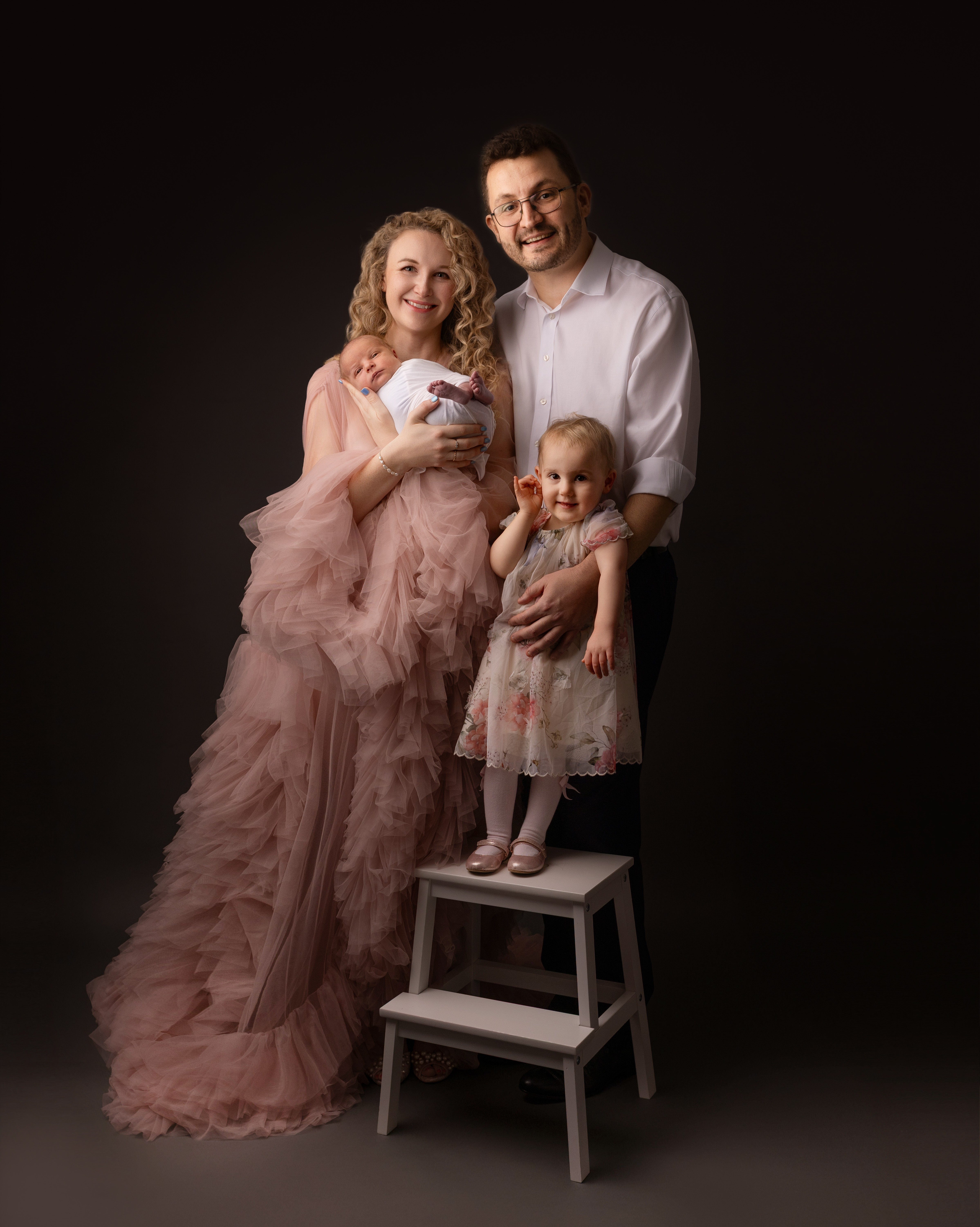
Charlotte’s story is also set to feature in the launch of our new Under 45’s Hub, which she thinks will have an important impact on those diagnosed with ovarian cancer at a young age:
“We know that being diagnosed under 45 is not the most common experience with ovarian cancer, so lots of information out there won't include more detail about the specific challenges that people under the age of 45 will face. I think that’s why a place like Ovacome’s new hub is so important. It’s a place where they can feel heard and less isolated, they can connect with other people going through that same experience. I think that's essential, really.”
To conclude, we spoke to Charlotte about how she manages her diagnosis currently and the uncertainty that is still there, and also touched upon some of the things she does to help manage those feelings.
"In terms of managing worry and uncertainty, I think it’s different for everyone and I don’t think I have a perfect solution. From my perspective, I think talking to people about your situation - a friend, family, a therapist – that can be so important. I still have some bad days where I worry about the future and I don't know if I'm going to have a recurrence or not, but for me now I have a plan of action of what I know helps."
Charlotte continued:
"For example, exercise and being out in the fresh air is really important to me, which is part of the reason why I trained to be a Fitness Instructor – it feels good to give back and doing things like this just boosts my mood. Other than that, I’d say find a good support circle, advocate for yourself during your diagnosis and focus on living in the present moment.
For me, spreading the word about ovarian cancer and raising awareness has become a real passion of mine, something that I'm really so grateful for from this journey. I've done some amazing things over the last few years, since my diagnosis, and met some incredible people. I just hope that with the work that I've done, I’ve managed to help at least a few people, and I think that in itself is just such a positive thing to come from such a difficult experience.”
We’re incredibly thankful to Charlotte for not only writing our new GCT Information Booklet, but for also sharing such a deep account of her own personal experiences.