Lee
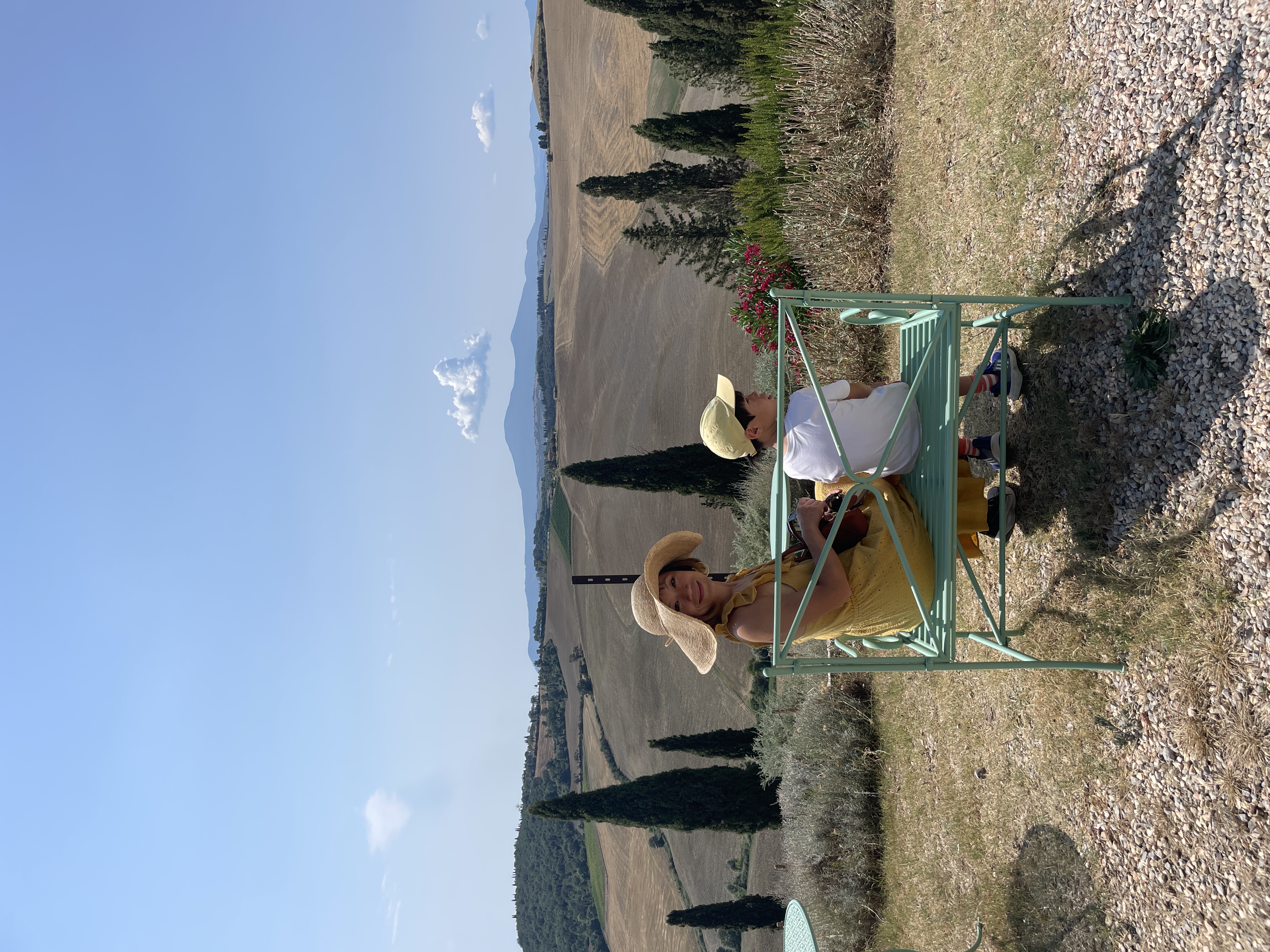
Lee’s experience with ovarian cancer started in May 2020, during the time when the world was gripped by an unprecedented pandemic. At this time, Lee was 43, and she had been working from home. As the creative director of a company and a mum to a three-year old boy, Lee lived a fairly busy lifestyle, which extended to her interest in exercise and fitness.
“At the start of lockdown nobody really knew what was going on, with new rules around exercise and social distancing introduced I had to stop running. It wasn’t until May that I decided to pick it back up again, as I’m normally very fit and enjoy running.”
Lee’s first potential ovarian cancer symptom had come just before lockdown, when she started experiencing intermittent bleeding. Lee intended to see a doctor at the onset of this symptom but decided against it due to the pandemic and subsequent lockdown.
“I hadn’t needed to see a doctor in years, and I see myself as fit and healthy due to my interest in running and living a generally healthy lifestyle. So, when this symptom started I had intended to see a doctor, but sort of talked myself out of it. I felt guilty with the lockdown and didn’t want to take up appointments with something I thought was just a small issue.
Although the bleeding was heavy at times, I thought it was just something hormonal – having breastfed for a long time with my son alongside working a demanding job, I thought maybe it was stress induced or hormonal and might level itself out.”
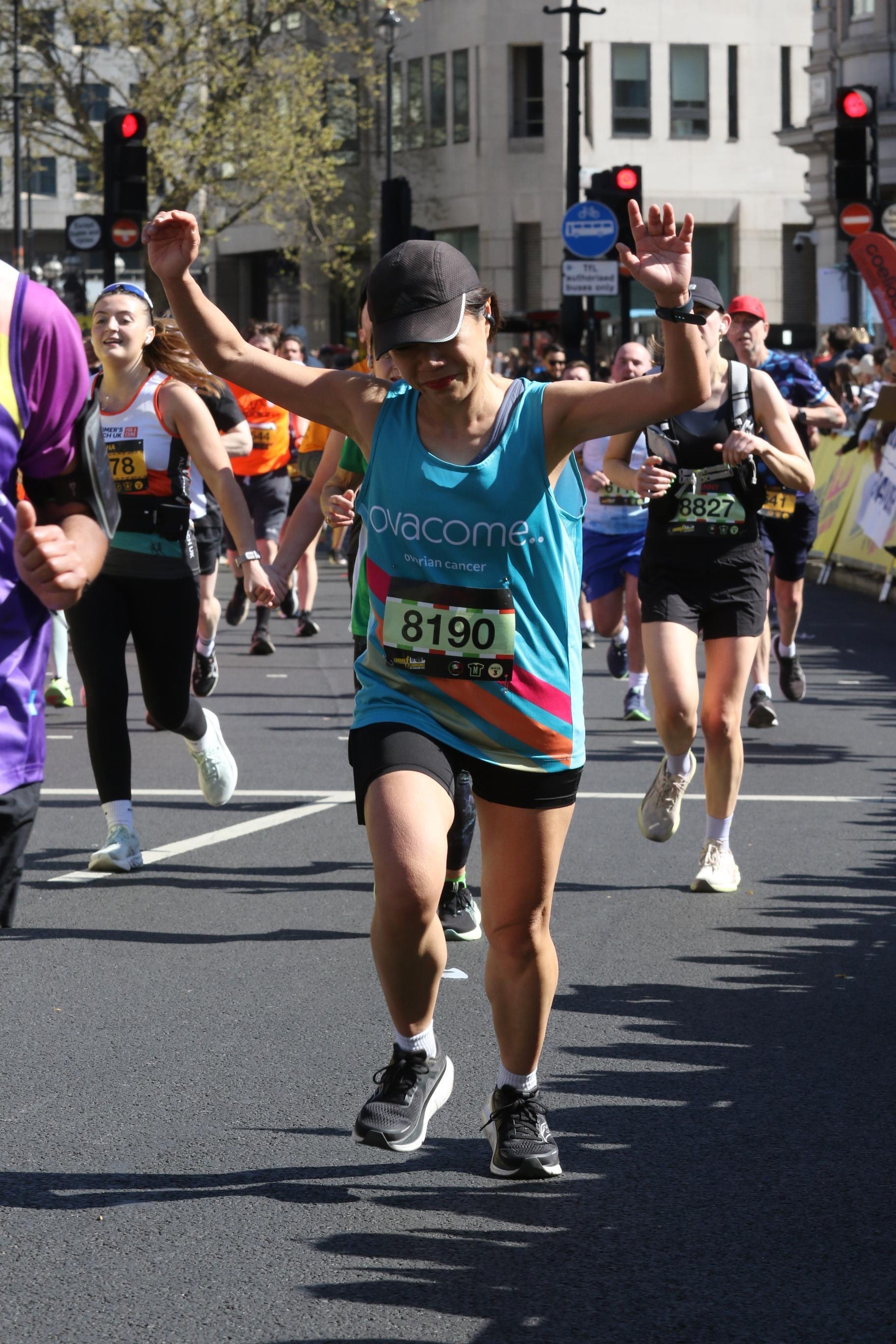
As Lee did more running throughout May and June, she started noticing that she had sharp pain around her left pelvic area, which led to pain sitting and standing too.
“At this point I hadn’t been to a doctor in four years, but I decided to get an appointment. So, after an initial phone appointment, I went in to see the doctor as it still didn’t feel right to me. The doctor did a thorough check – she felt my tummy, pelvic area and concluded that she thought I might have just pulled a muscle. I wasn’t convinced but I went home and stopped running for a while to see if it would help.”
Unfortunately for Lee, the pain didn’t completely go away, and when she started running again it came back even worse.
“I was managing to do yoga which was fine, but I wanted to run! It was this sharp horrible pain every time I tried, preventing me from running properly. I had a friend who was a doctor so I asked her what should I do? She told me to just go straight to A&E, which again I felt guilty about. My friend said I should say my pain was a 10 out of 10 even if it wasn’t, knowing that many women tend to downplay their pain. She wanted me to really advocate for myself and the fact that I knew something wasn’t right.”
Lee subsequently went to A&E, explained her pain and was given some painkillers. She was scheduled to have a transvaginal scan and a blood test two weeks later. The scans quickly revealed something wasn’t right, she was seen by the duty doctor immediately and informed that they had found something sinister and that an MRI scan would be required to confirm.
“In that moment I was really scared, but at the same time I was almost relieved as I wasn’t just imagining this pain. I said to one of the sonographers I’m really glad it’s not all in my head, as the whole experience can make you doubt yourself.”
It was during COVID, so Lee still had to wait to be seen by gynaecologists to receive a diagnosis and work out a plan of action. As the pain worsened and she started to become bloated, Lee decided to go the private route through her private insurance so she could be seen more quickly. A further CT Scan and CA125 test revealed that Lee had a tumour that was 13cm, and her CA125 level was over 1,900 (with the normal level being under 35).
Lee was able to have surgery quickly through private healthcare, which fortunately appeared to have removed all visible cancer. She was later diagnosed with two different types of cancer – grade 1 endometrioid ovarian cancer and womb cancer.
After surgery, Lee was then faced with a subsequent dilemma about whether to proceed with adjuvant chemotherapy, as her surgeon said it was debatable for her type of cancer – treatment intended to prevent cancer from returning by targeting potential unseen cells, and often recommended when cancer is high-grade. Lee had no more visible cancer, and her cancer was low-grade. However, because of her stage, it is still recommended by some.
“I really didn’t know what to do because I knew how intense and hard chemotherapy was on the body, and I didn’t want to put myself through that if I didn’t need. At the same time, I wanted to do everything I could in the hope of seeing the end of this.”
To help her with this difficult decision, Lee had consultations with several oncologists.
“I had a big choice to make so I tried to gather as much information as possible – I saw several oncologists who all gave me different opinions and advice, which I think shows how everyone’s experience is unique and there’s no one solution for everyone. I was about to opt for chemotherapy when at the last minute I felt like it was the wrong decision – I didn’t end up having it and I’m lucky enough to still be cancer free five and a half years later as of right now”.
Lee’s dilemma highlights the stress that having to make difficult decisions around an ovarian cancer diagnosis can cause, and she is keen to make it clear that she thinks everyone should be their own advocate when it comes to their diagnosis and find out all of the facts and information:
“I really think you need all of the information in front of you so that you can make an informed decision. Obviously, listen to the experts, but I really think you should get as many expert opinions as you can. I often think back to how my doctor said I just had a muscle strain.
I’m glad I went to A&E and advocated for myself and I’m also glad I met one of the oncologists who really looked at the details of my histology and didn’t just use a blanket approach. She really took the time to explain all the facts and the research that has been done on my type of cancer, explaining why adjuvant chemotherapy is often overused for my type and grade of cancer.
I really admire her for having the guts to back this. There is no risk for an oncologist to tell me to have chemotherapy, but there is more risk in advising me not to if the cancer does eventually come back.”
Since her diagnosis, Lee has been a fierce advocate in raising awareness of ovarian cancer, featuring in awareness campaigns and spreading important information about the disease to all who would listen.
“I really wanted to raise awareness of my experience and the disease to help as many other people as possible. My oncologist said to me ‘you have to tell your story to help raise awareness’ and I think being a younger woman there is a misconception that younger people can’t get this disease, I’m proof that it’s not true. Overall, I wanted to just continue challenging misconceptions like ‘the smear test can detect ovarian cancer’ and really just help educate people on the topic.
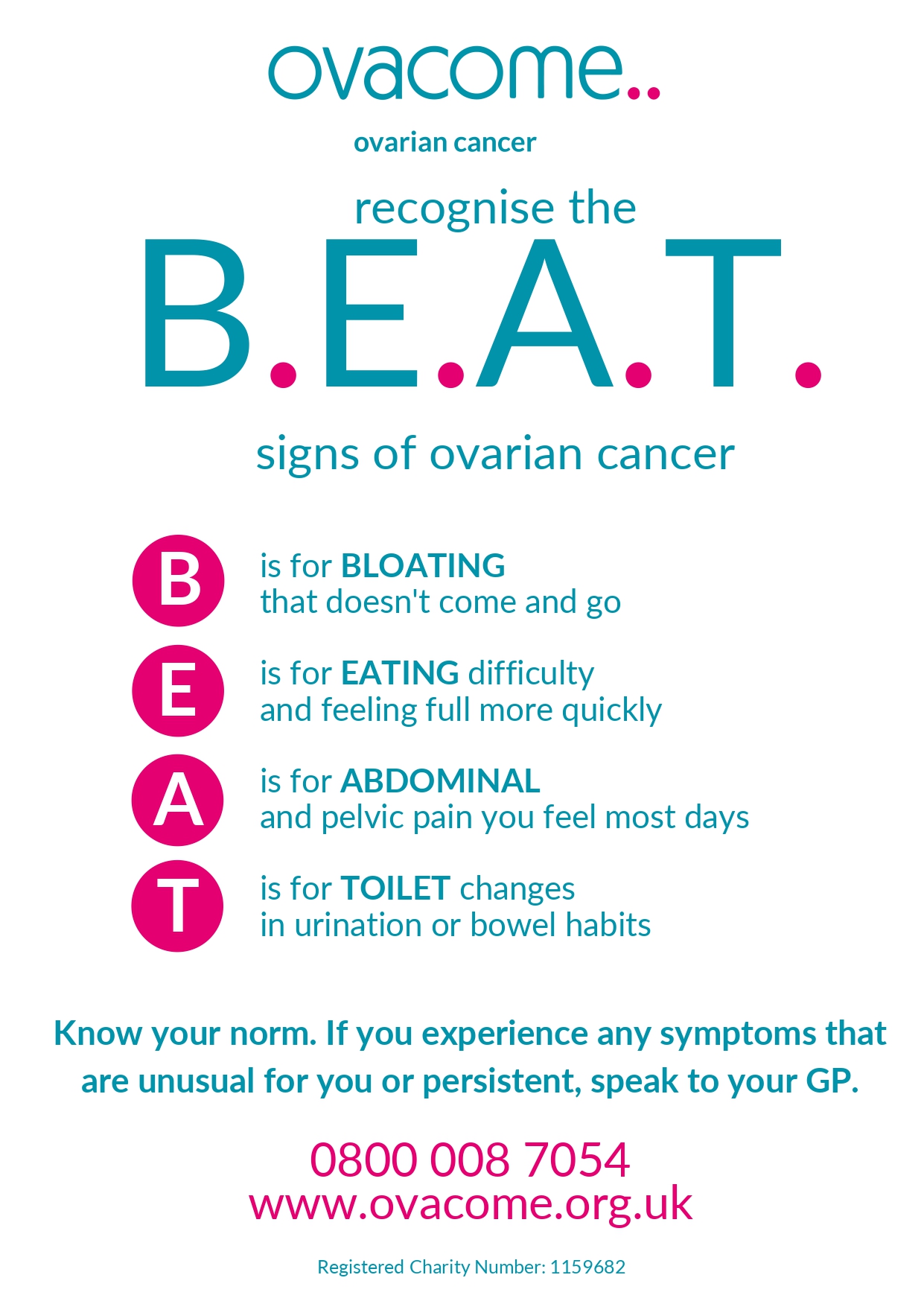
"I hadn’t actually even considered ovarian cancer before my diagnosis and I think that is in part because there is no singular diagnostic tool – if there’s no diagnostic tool then what are you looking out for? It’s really quite alarming that many symptoms can be brushed off without being checked further, similar to my experience of initially being given a diagnosis of a pulled muscle, it’s so important we raise awareness of the symptoms of ovarian cancer and even more important that women are advocating for themselves when getting them checked out. You have to push for yourself and your body – I really can’t stress that enough.”
In recounting her ovarian cancer experience, Lee also touched on the emotional and mental challenges she has faced.
“I think initially when I was diagnosed, I was just thinking ‘Why me? What have I done to deserve this?’. I had felt like I was trying my best to live life to the full which made me almost feel this sense of injustice, I didn’t feel it was fair at all which was really hard. The next difficult thing that struck me was that everyone was focused on getting rid of this cancer but nobody else but me was asking why did this happen, what caused this? Was it the IVF? I just couldn’t figure it out as a young and healthy woman, it was driving me crazy and I wanted detailed answers to the root cause, which isn’t always possible. I think mentally, that was one of the hardest things to deal with.”
Lee also spoke to the difficulty of feeling emotions like guilt, all while trying to navigate the hard and uncertain times of the pandemic.
“It was a really dark time after the surgery, because it was the pandemic and nobody could really visit me. As I said I really wanted to find a root cause, and I started to blame myself and feel self-guilt around my diagnosis, I thought to myself ‘how did I let this slip past me?’. I also remember trying to plead for time so I could at least see my son’s first day at school, so now every school year is a milestone. Honestly it was the lack of control over the whole situation that got to me, and I really didn’t view myself as a fighter, I just feel I got lucky with my recovery rather than doing anything specifically, these are the thoughts and emotions that I don’t think get talked about enough and are really hard to process.”
After going through so much, Lee has a few final thoughts on her experience and advice she’d give to others facing a diagnosis:
“I think to sum everything up I would say first, don’t blame yourself for what’s happening to you. It took me a long time to get to that point. Then I’d say, just keep advocating for yourself and your body, you know your own body better than anyone. Finally, I think my experience has taught me to treat yourself as a one-off unique case.
"There are lots of statistics around ovarian cancer but you have to treat yourself as a unique experience, which we all are anyway, as we all have so many different experiences and variables that we can’t just be defined by statistics. We are all different and we all deal with things differently, I think it’s important to remember that."
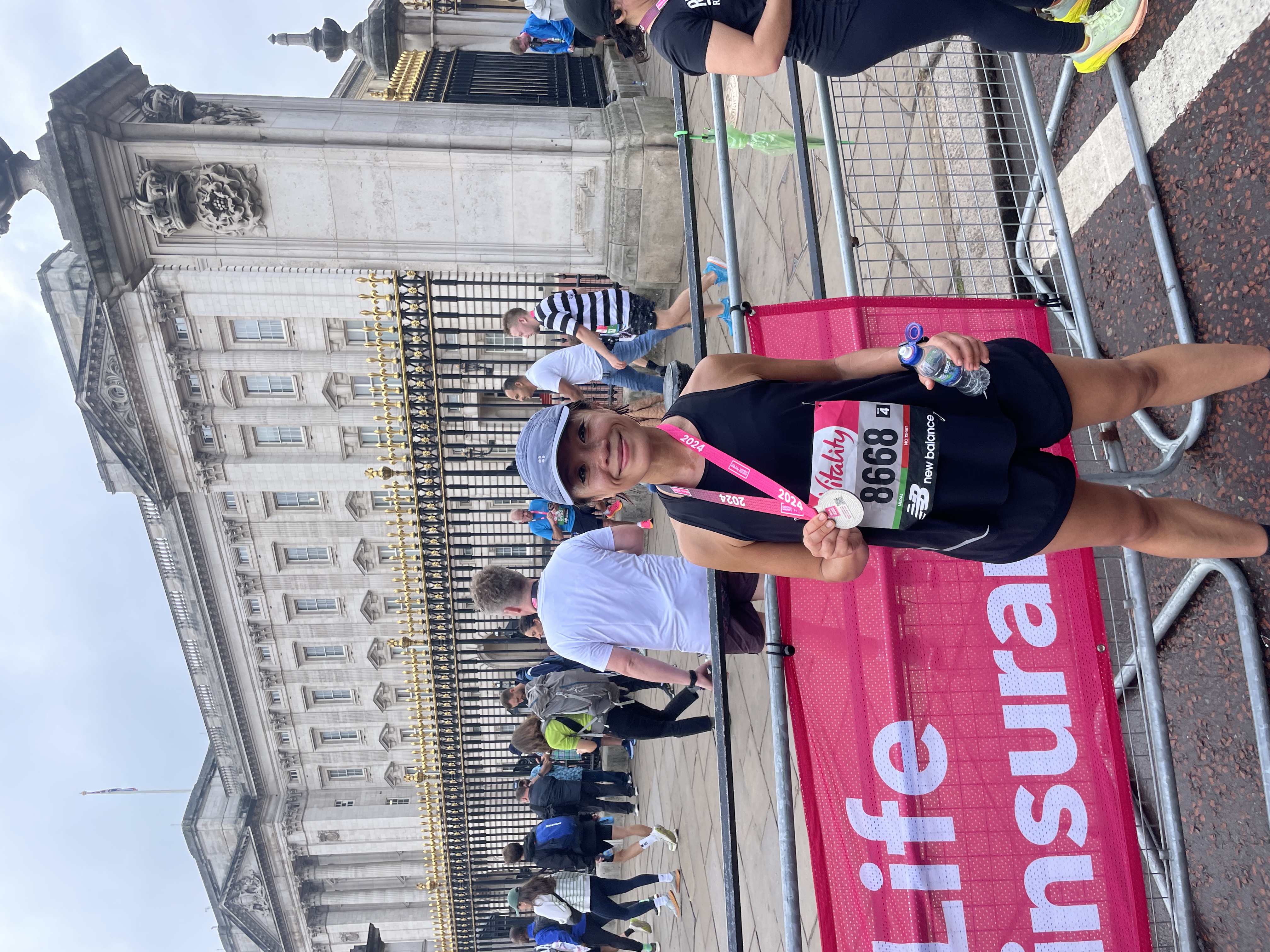
Since her diagnosis, Lee has completed several marathon fundraisers in aid of ovarian cancer, continued to raise awareness and helped to share the signs and symptoms of the disease. She has also recently been appointed as a lay committee member for NICE, helping to shape ovarian cancer pathway guideline and a PPI member of the OvarianVax Core Group, supporting the research team in developing the world’s first vaccine (OvarianVax) to prevent ovarian cancer.
Lee’s story is also being spotlighted on our new Under 45’s Hub, and we asked how important of a resource she thinks this can be for younger people facing a diagnosis of ovarian cancer.
"I think this new Under 45’s Hub is going to be very important. There is a misconception among the public, as well as within the medical profession, that it is unlikely for people under 45 to get ovarian cancer, so this resource can help demystify that. When I was diagnosed, I found it really hard to find any resources or networks where I could speak to people under 45. I really appreciate having found Ovacome, as it allows us to connect with and relate to each other. This hub also provides important resources specifically for those under 45, as we still have many life experiences to navigate at this stage, including what life looks like after cancer, such as fertility and returning to work."
We finished by asking Lee when she discovered Ovacome and what she liked most about the charity:
“I was still in the hospital bed when I discovered Ovacome, but I think the thing I like most about the charity is the community aspect to it. I want to share my story with the Ovacome community and show that ovarian cancer doesn’t discriminate by age, ethnicity or anything else. Hopefully we can spotlight a diverse group of people who are affected by this disease and continue to raise awareness and spark conversations that can lead to better outcomes for all in the future”.
We’d like to extend a massive thanks to Lee for sharing her story and providing such an intimate look into her experiences.