Christine
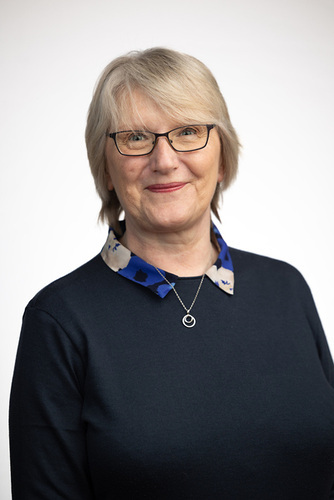
In this ovarian cancer story, Christine reflects on her diagnosis, the challenges she faced in getting answers, and how her experience led her into advocacy work. She also shares how advocacy helped her find her voice, challenge stigma, raise awareness and support others affected by ovarian cancer.
Christine is from Belfast and previously worked within the private sector, specialising in cybersecurity and data governance before retiring in May 2023.
“I’m Christine from Belfast, and firstly I’m a mother, I'm a daughter, I'm a sister and I'm an aunt. I just also happen to have a diagnosis of Stage 4B High Grade Serous ovarian cancer. Why I say those four things before mentioning my cancer is because I don’t want my cancer to define me. I’m still Christine who lives in Belfast, and while my cancer has given me a platform for awareness and advocacy work, it doesn’t define me as a person.”
Christine is sharing her story with the goal of raising awareness of the disease, as well as the hope that her experience may resonate with and help others who are also facing a diagnosis of ovarian cancer.
Symptoms
For Christine, her symptoms started months before she received an official diagnosis:
“I first started experiencing symptoms around October and November time of 2020, when we were still living through the pandemic. So, I spoke to my GP, but I was unable to get a face-to-face appointment at that point. I was basically just told to keep an eye on my symptoms. It wasn’t until February 2021 when I did manage to get a face-to-face appointment with my GP, and she took one look at me and said we need to get you to hospital for further testing.”
“The extreme fatigue was unusual for me, but I also had this severe bloating. We used to joke as a family at the time that I was expecting twins – because my stomach had expanded so much. I also had a change in bowel and urinary habits, all classic symptoms of the disease, but I didn’t recognise them as potential symptoms at the time as I wasn’t informed on ovarian cancer.”
Receiving a diagnosis
Fortunately for Christine, an early appointment became available in April after a cancellation, which is when she finally received some answers and a confirmed diagnosis of ovarian cancer.
“I jumped at the chance of this appointment as I’d been getting progressively worse and I just wanted to find out what was wrong with me. When I got there, I explained everything that had been happening to me, and after that they sent me out of the room and asked me to wait. When they called me back, they asked if I had anyone with me, but it was Covid so I was alone, and that’s when the nurse put her hand on mine and told me they suspected I had ovarian cancer — it felt like I was outside of my body in that moment.”
Christine was told a bed had been made available to her in another local hospital, and she would need to stay there for some testing. After a week of biopsies and various tests, Christine received confirmation that she did have ovarian cancer.
“I was with my twin sister when I got the diagnosis, and I just remember her falling to the floor, and I just wasn't processing what was being said to me. I have to be honest, in that moment I was more concerned about my sister fainting, and as I said, I almost felt like I was outside of my own body watching what was happening to me.”
For lots of people who receive a cancer diagnosis, the news can be incredibly hard to process and understand. In Christine’s situation, she had to come to terms with not just the shock of her diagnosis but also the difficulties of facing it during the pandemic.
“I had never really been in hospital before, apart from when I had my children, so even just being in that environment was a lot to take in. I ended up staying in for over three weeks, and I actually became seriously unwell during one of the nights. All the symptoms seem to hit me at once, and at one point I remember thinking that I wouldn’t be leaving the hospital. I was moved to a side room for privacy, and essentially told that I would potentially need to have difficult conversations with my family, so needed a private space to do it. I really did think – ‘I’m not getting out of here'.”
Christine explains that while she had frustrations with the initial delay of getting a diagnosis, she was grateful for the level of care given by staff at the hospital and the speed of her treatment once she was in the hospital system. This experience played a major role in drawing Christine into advocacy work around ovarian cancer.
“As it was during Covid it was tricky with visiting, but the staff set up a rota for my family to visit at different points, which was great, and everything moved quickly once I had my diagnosis. I wouldn’t like to think where I might be if the earlier appointment hadn’t come up, and I think the difficulties and frustrations I experienced are a large part of what led me to doing advocacy work around ovarian cancer. There are so many people who I’ve seen who fall through the cracks, which is why I think advocacy work is important, addressing those inequalities and barriers, making sure care and treatment is accessible for all.”
Treatment
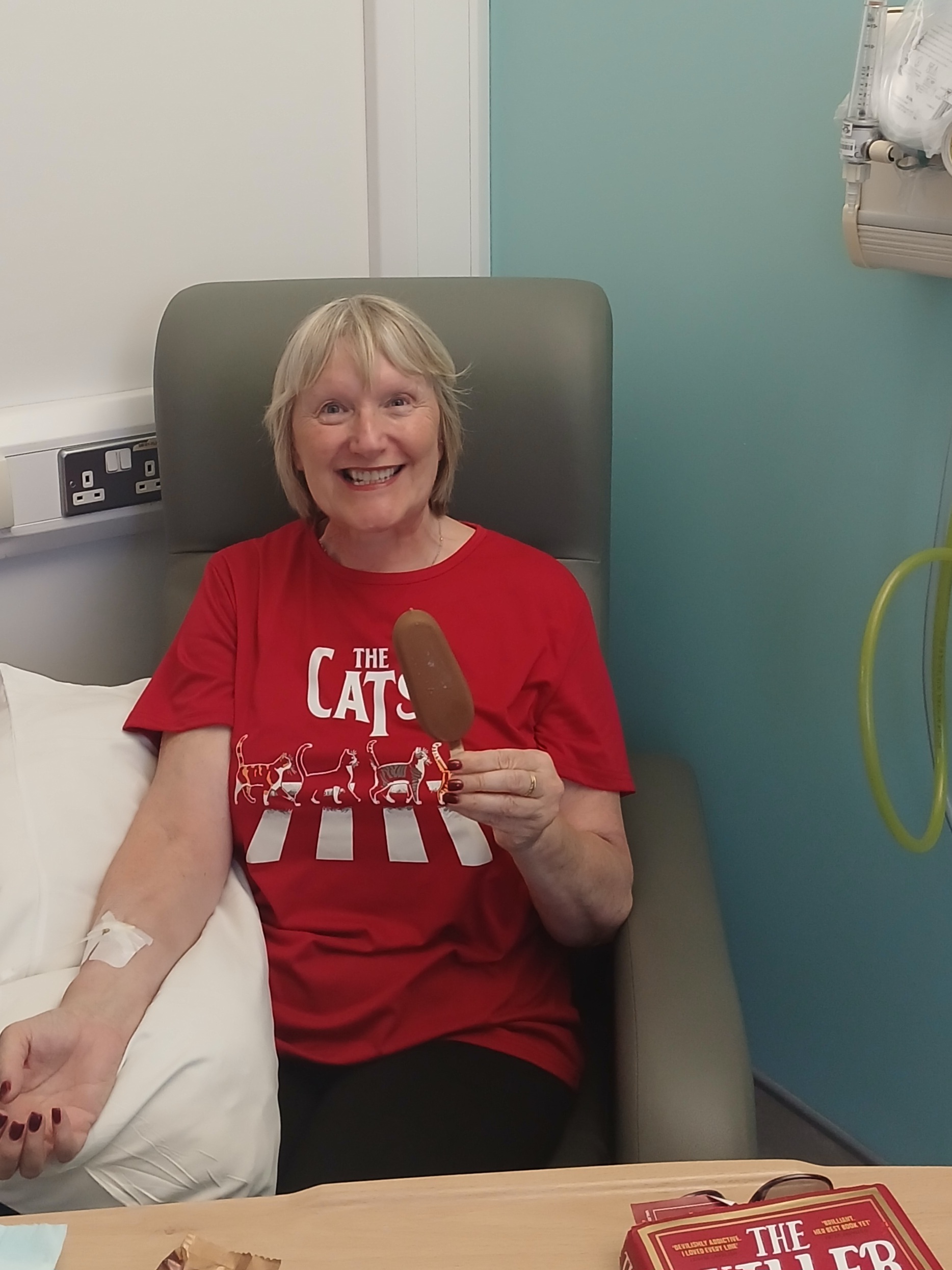
After her diagnosis, Christine received treatment in the form of debulking surgery and chemotherapy, and she was also treated with a PARP inhibitor. Unfortunately, in July 2023, Christine was told the inhibitor had stopped working and her cancer had metastasised.
“I asked for a prognosis, as I’m someone who likes to have the information in front of me, then I can go away and process it. They gave me a prognosis of four to six months at that stage. I’d gone from pushing through, telling myself I was going to beat this to then suddenly being told I had four to six months, which really set me on a downward spiral.”
Following this news, Christine asked what could be done and was offered chemotherapy to keep symptoms at bay for as long as possible.
“After the course of chemotherapy ended, all that was left that I could have was pain management drugs. That was until I had a phone call about the potential of taking a new drug! My oncologist called me in the April explaining that there was a new drug that had been approved by NICE in Northern Ireland and that I was an ideal candidate for it.”
“There was no guarantee I would get access to it because of the cost, and I was told they would need to make a business case to the Department of Health in order for me to have access, however my oncologist at this point knew all about my advocacy work and viewed me as the perfect person to challenge the decision if I wasn’t granted access.”
Fortunately, Christine was given access to the drug and her health improved. She spoke about the emotional volatility of being in a position where she was having end-of-life conversations to suddenly being given another lease of life, and how she managed a complex mix of feelings around this.
“So, I was given access to the new drug, and I’ve been on it ever since. Since starting it, my disease has remained stable. To go from having conversations with the hospice about where you want to spend your last days, do you want a DNR, do you want a right to refuse treatment, what’s your advance care planning... to then suddenly feeling, wow — okay, I don’t need to be worrying about that just at this minute in time. What is it that I actually want to do here? It’s quite a lot to process.”
Patient advocacy
As previously mentioned, Christine had already been involved in advocacy and awareness-raising work following her diagnosis. However, after gaining access to this new treatment she felt a renewed sense of purpose, which made her look at her advocacy work differently and deepened her commitment to it.
“It sounds very altruistic. I don’t mean it to sound like that. It was like I thought, I’ve got a purpose here. I’m here for a reason.”
Christine’s experiences also changed the way she approached speaking up. Having previously felt unheard, she says her diagnosis gave her a different perspective on fear and what it means to challenge things.
“I sometimes think, ‘Is it my diagnosis that has given me this voice? Or was that voice always there and I was too afraid to use it?’ During my career, in many meetings I attended, I might have been the only female in the room. Not to stereotype of course, but I always felt like my voice was suppressed because people were louder than me. And I felt that I wasn't being heard.”
Advocacy has changed that for Christine, and speaking up now comes from a place of lived experience, and from the perspective that the worst thing she feared has already happened.
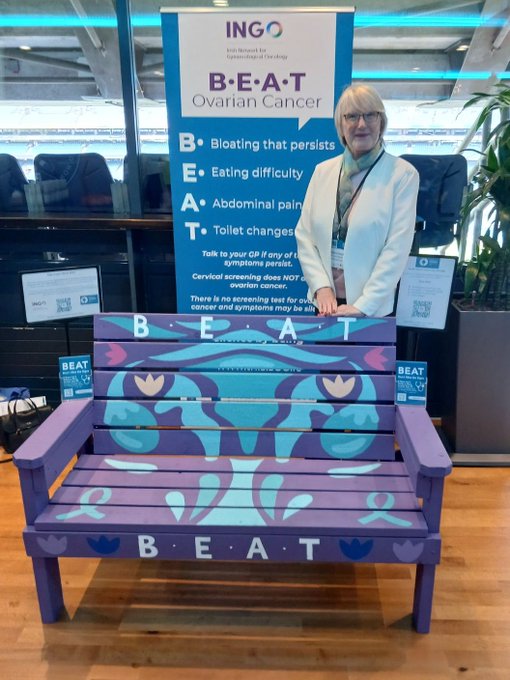
Christine with Ovacares' BEAT symptom awareness bench
“One of the things that I have said to people is, what is the worst thing that could happen if you open your mouth and challenge something? I'm like, well — it's happened to me. I've been given a time-limited prognosis. That's the worst thing.”
“So now I just ask for forgiveness, not permission. Funnily enough, I would say when I'm talking to advocacy groups, I would say we do have this superpower. We're not tied to political ideals or professional standards. Yes, we do have to be careful in what we're saying, especially if we're representing particular groups. But I always say a patient advocate has a superpower — they ask for forgiveness, not permission.”
Through advocacy, Christine has found herself speaking more openly than she ever expected to. Before her diagnosis, she says she was seen by those closest to her as a very private person, but sharing her experience has helped her challenge the stigma that still surrounds ovarian and other gynaecological cancers.
“My daughter or my sister always laugh at me because they say, Chris, you were always an extremely private person. And now I seem to be out there. I talk about my sex life!”
For Christine, being willing to talk about subjects like intimacy after cancer treatment is part of making sure people feel less alone and more able to ask for help. She believes these conversations matter precisely because they are often avoided.
“It’s another barrier, the stigma around cancer diagnosis, especially ovarian, gynae or prostate cancers.”
By speaking honestly about the realities of living with ovarian cancer, Christine hopes to make those conversations easier for others. For her, advocacy is not only about raising awareness of symptoms and diagnosis, but also about challenging the silence around the parts of cancer that people can feel afraid or embarrassed to discuss.
Discovering Ovacome
When recounting how she first came across Ovacome, Christine recalled hearing about an Ovacome Health and Wellbeing Day in Belfast through her advocacy work with Ovacare, an ovarian cancer charity based in Ireland that Ovacome often partners with.
“I actually had not heard of Ovacome before until possibly about two years ago. It was through my work with Ovacare that I found out Ovacome were coming to Belfast. That's how I became aware of what Ovacome were doing, the services provided, the support for people who have maybe just been diagnosed, or in my case, the really important bit is when you're discharged from the system, the support that's there for those people.”
Christine affirmed that she believes Ovacome’s support is especially important because people often don’t know what help they need until they reach the point of needing it.
“People don't realise the support that's there. They don't know what they need until they need it.”
Christine also values the fact that Ovacome offers support across the whole cancer pathway, from first symptoms and diagnosis through to life after treatment or discharge.
“Ovacome’s service, because there's a website there, it's 24/7 information. It's not just a phone line, 9 to 5. So, the information is there as and when people need it. That's really how I became more aware of what Ovacome actually does to support patients from, as I say, the first symptoms right through to their diagnosis and supporting them afterwards. So, it's all those steps of the cancer pathway, and that service is there which is just fantastic.”
Christine attended Ovacome’s Belfast Health and Wellbeing Day and says she would strongly encourage anyone considering attending to go along.
“I was tweeting like mad, just to advertise the event. I did get a lot of people contact me and a lot of them were there actually on the day and I think the turnout on the day was incredible, there were so many people!”
One topic that stood out to Christine was scar therapy, which many people in the room had never heard of despite having major surgery.
“I found it really insightful because of the topics, and one of the topics in particular I think was around scar therapy. I had never heard of that before and everybody in the room was going, what? Most of us, you know, had had the debulking surgery or surgery of some kind. So we were saying why have we never heard of this before? It would have made such a difference to know about it after surgery, so hopefully there were lots of people who greatly benefited from it.”
For Christine, the value of the day was not only in the practical information, but also in the connection it created between people with shared experiences.
“There were things there that I already knew about, but there was always something to learn, and there was real value in just speaking to people. You’re there in a group where you’ve all gone through a similar experience. You may be at different stages, but there’s that commonality, and the conversations just flowed.”
In Christine’s eyes, one of the most meaningful parts of the day was the friendships it helped create.
“I've made some great friends and we meet up on a regular basis. We go out for dinner or we go out for a cuppa and just have a chat, and not necessarily just chat about our treatment. I’m grateful that Ovacome helped facilitate the space for these connections to come about, which is why I think their Health and Wellbeing Days can be so valuable.”
Hope for the future
Reflecting on her experience with ovarian cancer and the unexpected path into advocacy it has led to, Christine shared how hope has always been a driving force for her.
“One of the things that I do say to people is, you will have bad days and you will want to give into this. And there is absolutely nothing wrong with that, staying in bed and putting the duvet over your head. But there is always that hope. You don’t have to be brave, positive, strong, fighting, all those sort of battle analogies and things like that.”
For Christine, hope is not about ignoring the reality of her diagnosis or pretending every day is easy. It is something she has held onto in the most difficult moments, particularly when she believed there were no further treatment options available.
“I always say hold on to hope. And I don’t mean to be patronising when I say that because hope is what has helped me. I thought there was no hope. I thought that nothing else could be done for me.”
Her own experience of being offered a new treatment after being told there was little else available has strengthened her belief in research and in continuing to ask what more can be done for people with ovarian cancer.
“That’s why research is so important and I’ve got this strong interest in research now. To literally go from saying there’s nothing we can do for you to two months later getting that phone call saying this drug has just come on the market and we can get you identified for it, it’s quite remarkable really.”
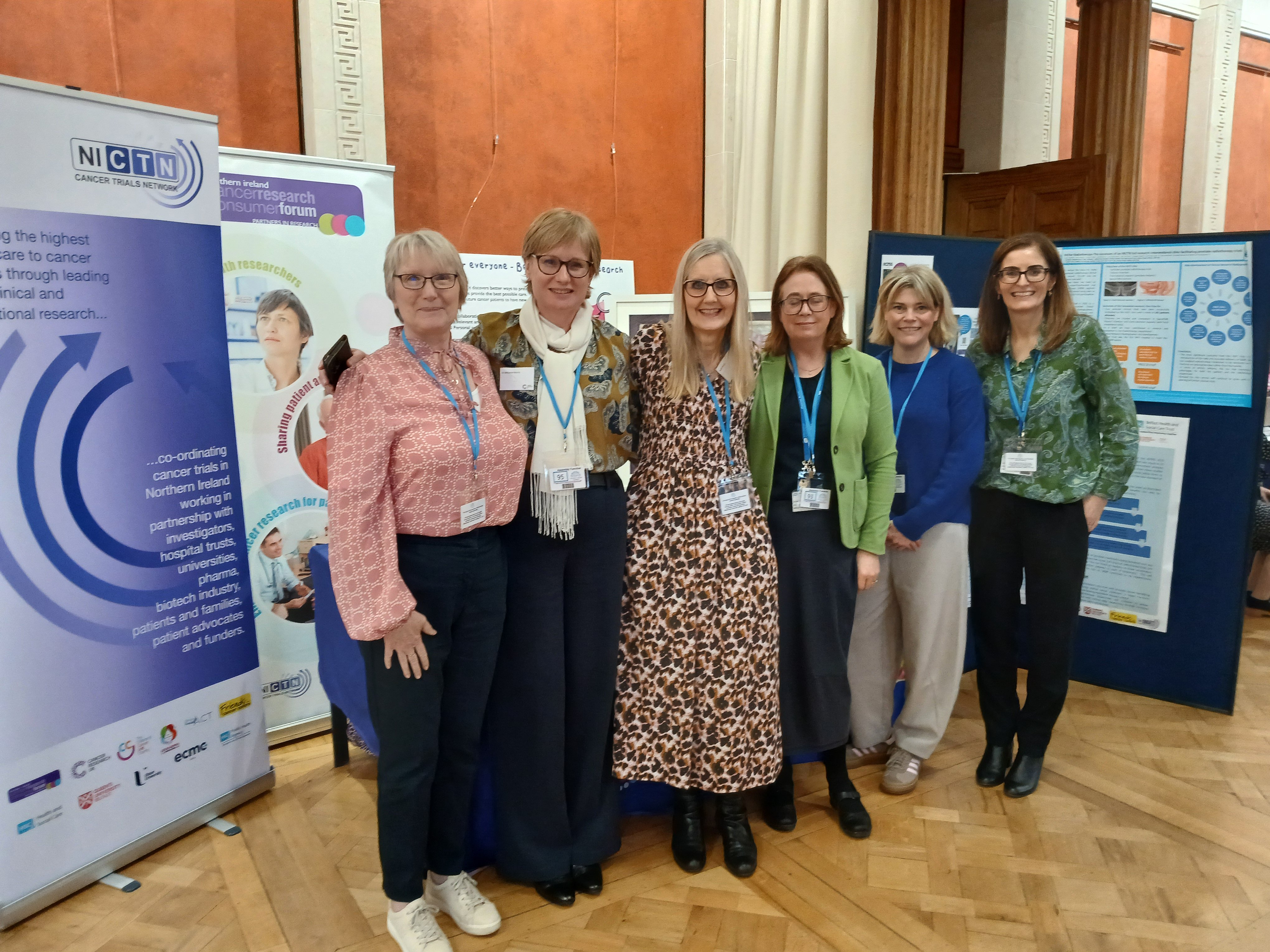
Hope, for Christine, is also tied to how she chooses to spend the time she has. Her diagnosis has changed the way she thinks about what matters most, and she now finds joy in spending quality time with her family and making memories together.
“I want to get up and I want to enjoy every day, and it does put everything into perspective. I probably spend more time now doing things with my family - not material things, but building memories, going to the theatre, going to the cinema, going out for a meal, just spending quality time together and building memories.”
“In the end, money and material things don’t really matter. They’re tangible, but they’re gone. So I find that spending time with my family and making those memories is what gives me the most joy, and what I want to spend most of my time doing!”
Ovacome would like to thank Christine for generously sharing her story and experiences. We also want to recognise and congratulate Christine for her continued advocacy work, raising awareness of ovarian cancer and helping to give a voice to others affected by the disease.