Lisa
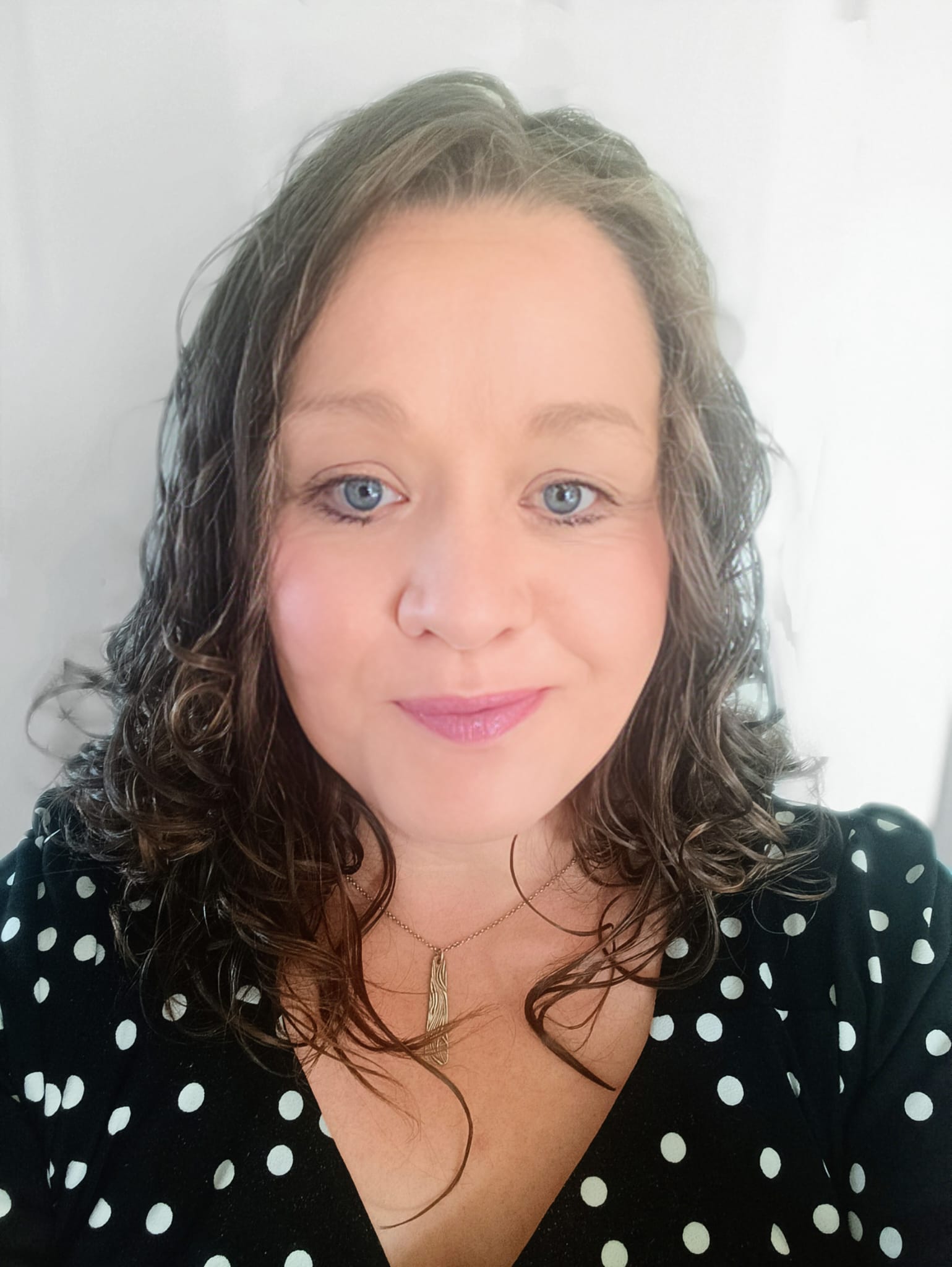
You can find out more about all of our trustees and Lisa on our trustee page here: https://www.ovacome.org.uk/trustees.
Lisa was just 41 when her experience with ovarian cancer began. Her initial suspicions of something being not quite right started in 2021, with the sudden development of an acute pain down one side of her body, which then travelled to the other side as well.
Lisa then spent around a week in hospital, in the September of 2021, as doctors tried to get to the bottom of her pain, but didn’t receive any concrete diagnosis and was treated as an outpatient. Then, in December, she was suddenly rushed to hospital for emergency surgery after becoming severely unwell.
“It was the day after Boxing Day, and I had attempted to go to work, my tumour was rupturing - although I didn’t know what was happening at the time. I didn’t actually get a diagnosis until January, just after I turned 42, which was a result of a biopsy. I was diagnosed with mucinous ovarian cancer at Stage 1C.”
For Lisa, the diagnosis came as a huge shock, completely turning her world upside down, particularly with three young children. She spoke to the isolation and uncertainty she felt after receiving her diagnosis.
“Almost overnight, everything moved on its axis. I’m married with a young family, so it was a huge amount to take in. Initially, the surgical oncology team were talking me through surgery options and treatments, highlighting the fact that it was a rare cancer. They did say, ‘well there's not a lot of information out there, you know, we don't know a lot’. I’m a bit of a research kind of person so that didn't quite wash with me. I felt very isolated, because there was nobody else that I could chat to about any of that. The initial period was really hard.”
Lisa recalls finding Ovacome and utilising our resources to help navigate this uncertain time.
“I found Ovacome and I ordered some information books to start with, as there really wasn’t much information about rarer ovarian cancers out there. I really needed a trusted source of information, because when you’re first diagnosed you can read a lot of horror stories. I wanted some support and advice on how to navigate everything and also some input to help me with having to explain the situation to my children. In that initial period, it really was Ovacome and Macmillan that became my trusted sources of information around my diagnosis.”
Lisa found that Ovacome was a huge boost to her in several ways, particularly in navigating the volume of information she was hit with after receiving her cancer diagnosis:
“At the time of my diagnosis, everything felt overwhelming and quite hard to navigate. There’s a lot of information out there, but not all of it feels clear or relevant. Ovacome was one of the places that did, and it also felt like a community, not just a resource. Quite simply, Ovacome was there when I needed it.”
Lisa’s treatment pathway involved her first emergency surgery and a subsequent completion surgery a few months later. She was also treated with six rounds of carboplatin chemotherapy. Lisa describes how the idea of chemotherapy and what it actually entailed differed for her.
“The picture most people have in their head of what chemo is going to look like is quite scary, which was the same for me as well. I was absolutely convinced that the chemo ward was a really sad and gloomy place. Weirdly you get there, and there are people on business calls, people on WhatsApp, I quite loved chemo day in the end! It was a space that I got to put Netflix on and had permission not to do anything else. Honestly, I was expecting to see all of these really poorly people with drawn eyes, but actually it was like going to the dentist. You couldn't really tell, which I think shows that it’s not always obvious what someone is going through from a surface level view.”
One of the harder aspects of Lisa’s cancer diagnosis was facing a surgically induced menopause and the implications of that.
“My surgeon and team were amazing and I remember we talked about all kinds of practicalities. However, the one thing that was really tough was that we didn’t really touch upon being chucked into the menopause overnight, and that was a really, really dark spot for me. We didn’t want anymore kids, but being forced into infertility and having my hormones essentially flicked off was hard to deal with. I do think there’s still an emotional gap in conveying and supporting patients around these things – everyone has different circumstances and I think the emotional and physical effects of surgical menopause are really important to acknowledge.”
Another difficult part of the diagnosis for Lisa was having to explain the situation to her children, and she talked about using a visual metaphor to explain things to them.
“We talked to them about a ladder, and said to imagine that each step on the ladder is a different stage of the journey. We explained how I was on the lower steps - I think that worked for them as it made things slightly less big and scary. It was obviously hard for them, but we decided we wanted to be open and honest about the situation from the start.”
Lisa’s ovarian cancer experience also caused her to have new thoughts and feelings around identity:
“It was weird you know, to go from having straight, fair hair to much darker wavy hair (now becoming straight again), but it was also my sense of self that changed too. I think I was putting up a bit of a protective bubble at first. I didn’t do the school run for five months or so because I didn’t want the pity looks and I was still self-conscious. I recall thinking on some days that I didn’t want to be cancer mum today – I just wanted to be mum. So, I think cancer can have a huge effect on your identity, the way people view you and even the way you view yourself.”
“Ultimately, I think I hated feeling like I was just part of somebody else’s story, and I found a lot of the questions asked about my cancer quite intrusive at times. I really had to find ways to manage that, which I think is important for anyone in a similar situation.”
The changes Lisa felt because of her experience also extended to her professional life, where she was a deputy CEO at the time.
“I think it's in my nature to be the organiser and the fixer in life. Before my treatment, I was always the one in the family organising things like birthday parties, holidays, and medical appointments, and it was the same professionally – I was solving problems, fixing budgets and lots more. Looking back, I had so much on my shoulders, and I felt like I couldn’t show any kind of weakness, I actually feel it was a bit of a god complex! Since my experience with ovarian cancer, I delegate more, letting people look for answers or solutions themselves. I think my experience has helped me mature as a leader professionally.”
Lisa mentioned how her experience has made her more in tune with those she works with, and how she feels she is more sympathetic now.
“I would have had people working for me at points whose families were going through tricky times, and I'd like to think I was always sympathetic. I think now I feel like I'm far more in tune with that side though. So now if I have a member of my team that's got something going on at home, our first question is, ‘what can we do to help you?’. Overall, I think I'm far more emotionally in tune to how your home life impacts your professional life in a way that I don't think I was before.”
One important part of Lisa’s experience was how she took the decision to control the narrative around her cancer diagnosis. Lisa explains how she took power back over what was happening to her by being open about her experience:
“During my treatment, I'd got so many people wanting to know how I was, and I felt exhausted. Ultimately, I decided that what I'd do is periodically put a post up on social media, which started on Facebook and Twitter. In doing this I thought, ‘Well, look, I get to control my own story’. I also remember having a very conscious thought that actually, I also wanted to be a part of a bit of a counter narrative that highlighted the fact that cancer looked different for everybody - it's not all the same.”
Lisa discussed how she still went out on family adventures and how for her it was important to try to stay active.
“Gosh, we went to Warwick Castle, we stayed at Legoland, you know we really went on some adventures. In hindsight, I probably shouldn’t have gone to Legoland a week after chemo - it was tough, but I’m so glad we did it. So, we had all of these kind of things going on, and in addition to this I also worked through chemo, not at full capacity or anything like that, but I did, and I think that was really important for me. I think if I'd have been sat at home wallowing, I would have felt sorry for myself and had the narrative of ‘I'm very poorly and sick and therefore can't do anything’, and it would have stayed in my mind and not been very helpful, so yeah that was sort of how I tried to take back some control.”
Reflecting on Ovacome’s help, Lisa spoke about the key aspects of Ovacome that are important to her.
“Ovacome made a really, really isolating and very scary time far easier. I found my people at a time that I really needed to, which was great actually, and everybody in the Ovacome community was so generous with their time. From the ‘My Ovacome Forum’, to the groups online and WhatsApp groups, there were so many different places to turn to which was brilliant. I didn't need pity, I needed practical tips and advice with the chance to connect with other people who understood what I was going through, and Ovacome has provided that for me and so many others.”
Lisa currently has no evidence of disease, and has moved from quarterly to annual check-ups. To finish, we asked Lisa to sum up her thoughts about becoming a trustee at Ovacome and what excited her most about this new role.
“I think I bring a mix of professional experience and lived experience. From a work point of view, I’ve spent a lot of time in fundraising and communications, so I’m interested in how the charity continues to grow its reach and make sure its voice is heard. From a personal point of view, I came into this in my early 40s, with a family and a full working life, so I’m particularly interested in how we support people who are in that space – especially those with rarer diagnoses. More than anything, I care about making sure what Ovacome offers continues to feel useful, clear and grounded in real experience.”
We’re so grateful to Lisa for sharing her story and excited to work with her going forward!